How AI Search Optimization Tools Increase Organic Traffic

How AI Search Optimization Tools Increase Organic Traffic
A Practical Guide for Businesses Ready to Rank Smarter
SEO used to be a fairly mechanical game — stuff in the right keyword, get a few backlinks, write a meta description, and wait. That approach still works, sort of, but it’s nowhere near enough anymore. Search engines have gotten smarter, and the businesses winning traffic right now are the ones using AI search optimization tools to keep up with a search landscape that changes every few months instead of every few years.
Google’s own search experience has shifted toward AI-generated overviews, conversational results, and answers that pull from multiple sources instead of sending users to a single blue link. That means a page ranking on page one in 2023 might barely register today if it hasn’t adapted to how AI now reads, ranks, and summarizes content. Traditional SEO tactics — keyword density, exact-match titles, a pile of backlinks — still matter, but they’re no longer the whole story.
This guide breaks down what AI search optimization tools actually do, why organic traffic is more valuable than ever, and how AI is changing everything from keyword research to technical audits. By the end, you’ll have a clear picture of how to fold AI into your SEO process without losing the human judgment that still makes content genuinely useful.
What Are AI Search Optimization Tools?
AI search optimization tools are software platforms that use machine learning and natural language processing to analyze, predict, and improve how a website performs in search results. Think of tools like Surfer SEO, Clearscope, or SEMrush’s AI features — they don’t just tell you a keyword exists, they tell you what a top-ranking page actually needs to include to compete for it.
The difference between traditional SEO tools and AI SEO tools comes down to speed and depth. A traditional tool might hand you a spreadsheet of keywords and search volumes. An AI-driven tool analyzes the top 20 ranking pages for a term, pulls out shared topics, entities, and structure, and tells you exactly what’s missing from your draft — often in seconds, a process that used to take a strategist hours of manual review.
This speed is exactly why so many businesses are adopting AI SEO tools. A marketing team of two people can now do the competitive research that used to require a five-person analytics department. That doesn’t replace strategy, but it frees up time to actually act on it instead of drowning in spreadsheets.
Why Organic Traffic Matters More Than Ever
Paid traffic disappears the moment you stop paying for it. Organic traffic keeps working in the background, month after month, without a daily budget draining out of your account. That’s the core difference between organic vs paid traffic — one is rented attention, the other is owned visibility that compounds over time.
There are real long-term benefits here. A blog post that ranks well can keep bringing in leads for years with only occasional updates. It also builds brand authority in a way ads simply can’t — when someone finds your article through a genuine Google search rather than a sponsored placement, they trust it more, and that trust tends to carry into how they view your product.
Cost matters too. Studies on customer acquisition consistently show organic channels produce a lower customer acquisition cost than paid channels over a 12-month window, even though the upfront effort is higher. For businesses trying to grow sustainably rather than just buying their way to short-term spikes, that difference adds up fast.
How AI Understands Search Intent Better Than Traditional SEO
Old-school SEO obsessed over exact keyword matches. If someone searched “best running shoes for flat feet,” the winning page needed that exact phrase repeated a certain number of times. AI has moved the goalposts entirely — it’s now about user intent, not word-for-word matching.
Semantic search is the reason for this shift. Instead of matching strings of text, Google’s AI algorithms interpret meaning, synonyms, and related concepts through natural language processing. A page about “affordable orthopedic sneakers” can rank for that flat-feet search even without the exact phrase, because the AI understands the two concepts are closely related.
This is why context now beats keyword-stuffing every time. A page that genuinely answers the underlying question — including related subtopics a searcher would naturally want to know — tends to outperform a page that repeats one phrase a dozen times but never actually explains anything in depth.
AI Keyword Research: Finding High-Value Opportunities
Search volume alone has always been a misleading metric. A keyword with 10,000 monthly searches sounds appealing until you realize the keyword difficulty is high enough that only massive, established sites stand a chance of ranking. AI keyword research tools weigh both numbers together and flag the sweet spot — decent volume, achievable difficulty.
Long-tail keywords are where this really pays off. Something like “AI SEO tools for small eCommerce stores” gets a fraction of the searches that “SEO tools” gets, but it converts far better because the searcher’s intent is specific and closer to a buying decision.
AI tools are also good at spotting competitor keyword gaps — terms your competitors rank for that you don’t even have a page targeting yet — and grouping related terms into topic clusters, so instead of writing fifty disconnected blog posts, you build a handful of pillar pages supported by focused subtopics that all reinforce each other in Google’s eyes.
Frequently Asked Questions
No. AI improves research and optimization, but human expertise is still essential for strategy, creativity, and decision-making.
Yes. Many AI SEO tools are affordable and help small businesses improve rankings and organic traffic efficiently.
No. Google rewards helpful, high-quality content regardless of whether AI assisted in creating it.
AI Content Optimization for Higher Rankings
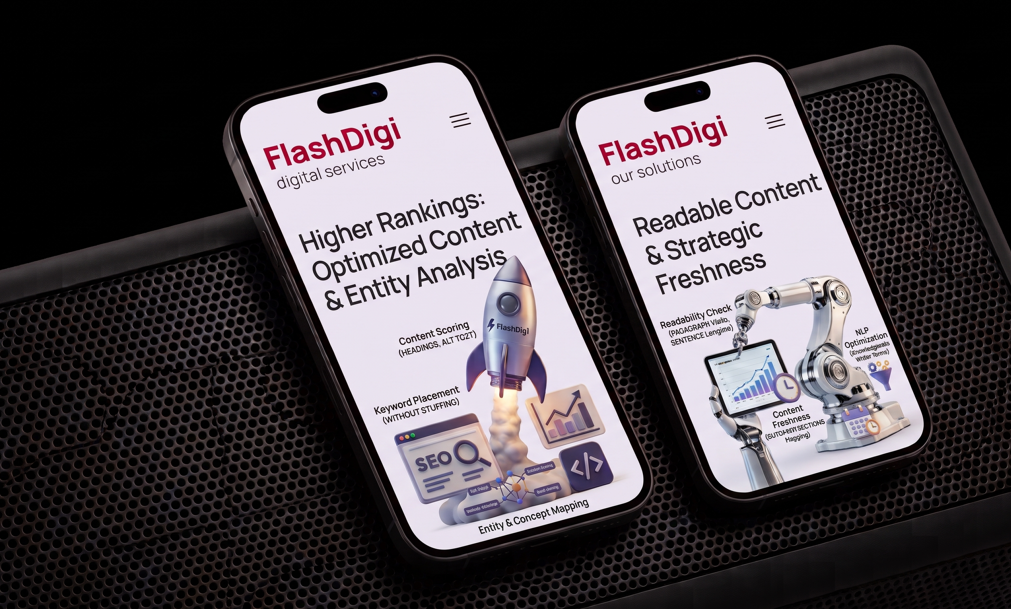
Once a draft exists, AI content optimization tools score it against what’s actually ranking. Content scoring looks at things like keyword placement — are the right terms showing up in headings, the first 100 words, and image alt text — without tipping into the kind of keyword stuffing that reads awkwardly to an actual human.
Readability gets checked too. If a paragraph is a wall of 40-word sentences, most AI tools will flag it, because Google’s helpful-content systems tend to favor pages people can actually finish reading. NLP optimization takes this further by checking whether related entities and concepts are present — not just the target keyword, but the terms a knowledgeable writer would naturally use around it.
Content freshness is the last piece, and it’s an easy one to ignore. A three-year-old article about “AI SEO tools” that hasn’t been touched since 2023 is quietly losing ground, even if nothing about the writing itself is wrong. AI tools can flag exactly which sections feel outdated so you’re not rewriting an entire post just to update one stale statistic.
AI-Powered Technical SEO Improvements
Content can be perfect and still underperform if the technical foundation is shaky. AI-powered site audits now catch problems a manual crawl would take days to find — broken links buried three levels deep, crawl errors that quietly block Google from indexing a page, and schema markup that’s missing or malformed.
Page speed and mobile optimization get flagged automatically too, often with a prioritized list of fixes ranked by expected impact rather than a generic 200-item checklist. That prioritization is the real value — most sites don’t need every technical fix; they need the five that will actually move rankings.
For a mid-sized eCommerce site with thousands of product pages, this kind of automated audit can turn a two-week manual process into an afternoon, freeing the dev team to fix the issues instead of spending most of their time just finding them.
AI Improves Content Personalization and User Experience
AI doesn’t just help pages rank — it helps them perform better once visitors arrive. Personalized recommendations, like a blog suggesting the next most relevant article based on what someone just read, keep visitors engaged rather than bouncing after one page.
Better engagement shows up in the numbers Google cares about: a reduced bounce rate, longer sessions, and ultimately better conversions. A visitor who reads three articles and then signs up for a newsletter is worth far more than one who reads a single page and leaves, and personalization is one of the more reliable ways to nudge that behavior.
Predictive SEO: Using AI to Stay Ahead of Trends
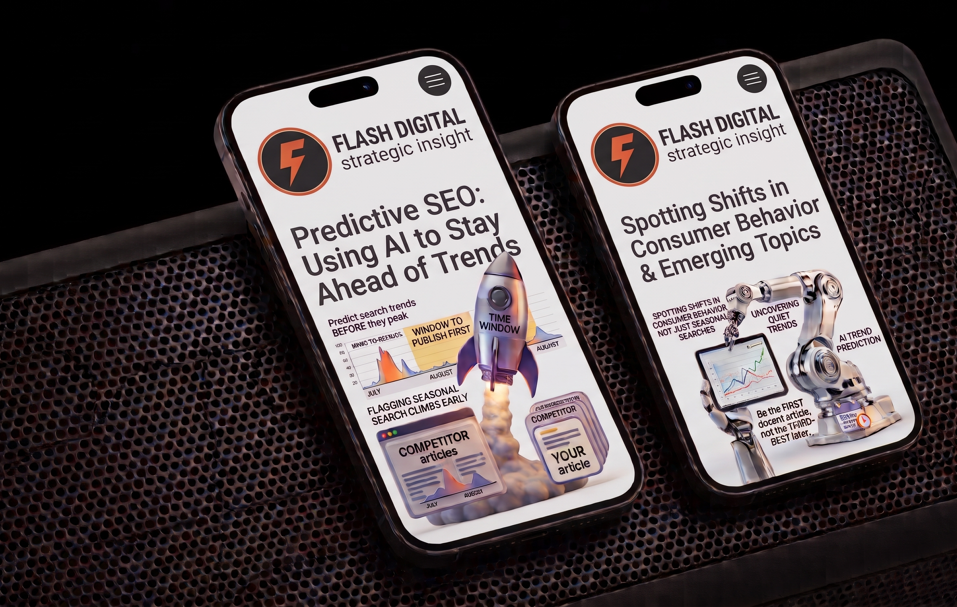
Most SEO is reactive — you notice a keyword is trending after competitors have already published ten articles about it. Predictive SEO flips that. AI tools analyze historical search patterns to predict search trends before they peak, giving you a window to publish first instead of fifth.
Seasonal searches are an obvious example — a tool can flag that “back to school laptop deals” starts climbing in early July, weeks before most retailers even start planning content. But the more valuable use is spotting shifts in consumer behavior and emerging topics that aren’t seasonal at all, just quietly gaining traction.
That early window is a genuine competitive advantage. Being the third-best article on a topic that’s been searched for two years is a lot harder than being the first decent article on a topic that’s about to take off.
Measuring Organic Traffic Growth with AI Analytics
None of this matters if you can’t measure it. AI analytics platforms pull performance reports together automatically, tracking CTR, rankings, and impressions in one view instead of forcing you to stitch together three different tools.
Conversion tracking closes the loop by connecting rankings to actual business outcomes — not just “we rank #3 for this term” but “this term brought in 40 leads last month.” AI also flags user behavior patterns, like a page with high traffic but a suspiciously short average time on page, which usually signals the content isn’t matching what searchers expected when they clicked.
Common Mistakes Businesses Make When Using AI SEO Tools
The biggest mistake is treating AI as a content factory rather than a research assistant. Overusing AI-generated content without editing produces pages that are technically optimized but read like nobody actually cared — and readers, along with Google’s quality systems, notice.
Ignoring user intent is another common trap. A tool can tell you a keyword’s search volume, but it won’t stop you from targeting the wrong angle if you don’t actually read what’s already ranking. Keyword stuffing has crept back in too, just dressed up as “AI optimization” instead of the old-school version.
The last two mistakes are the quietest but most damaging: skipping human editing, which lets factual errors and awkward phrasing slip through, and forgetting technical SEO entirely because content tools feel more exciting to work with than a crawl report full of 404 errors.
A Few More Quick Answers
Almost every industry can benefit, especially eCommerce, SaaS, healthcare, finance, technology, and local businesses.
Yes. AI can identify outdated content, improve keyword usage, enhance readability, and suggest optimization opportunities.
Results vary, but most websites begin seeing improvements within a few months when AI insights are applied consistently.
Best Practices for Using AI Search Optimization Tools
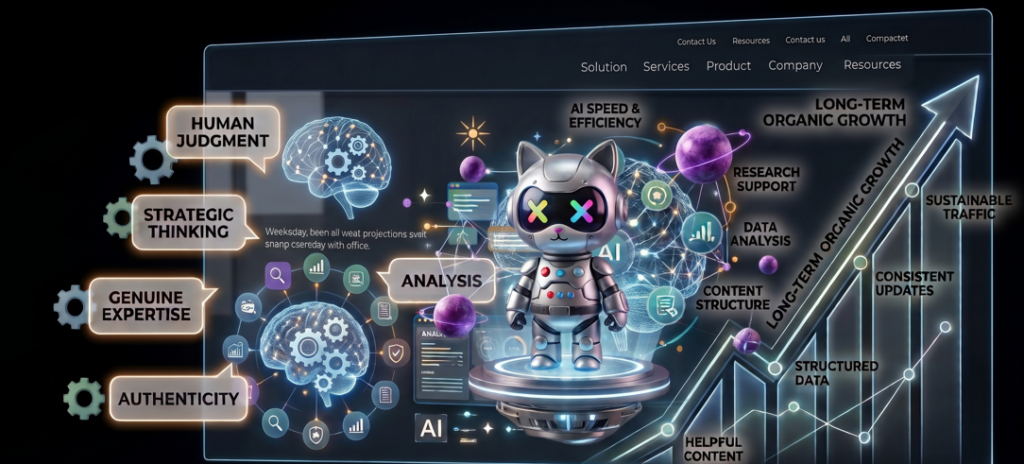
The businesses getting real results treat AI as a co-pilot, not an autopilot. Combining AI with human expertise means letting the tool handle research and pattern-spotting while a person still makes the final call on tone, accuracy, and whether the content actually helps someone.
● Focus on helpful content that answers the real question, not just the keyword
● Optimize for search intent first, keyword placement second
● Set a regular schedule for content updates instead of publishing and forgetting
● Monitor analytics monthly so small drops get caught before they become big ones
● Build topical authority by grouping related articles instead of publishing randomly
It’s also worth saying that AI hasn’t erased local search behavior. Plenty of business owners still type things like “SEO agency near me” into Google when they’d rather work with a team they can call or meet in person, so even an AI-first strategy should leave room for that kind of localized intent where it’s relevant.
The Future of AI Search Optimization
Generative AI is already reshaping how results get displayed, with AI search engines summarizing answers directly on the results page instead of just linking out. Voice search and visual search are growing alongside this, meaning content increasingly needs to answer questions the way a person would actually ask them out loud, not just type them.
Personalized search is going to keep expanding too, with results shifting based on a searcher’s history and location rather than showing the exact same page one to everyone. On the tooling side, expect automated SEO workflows to keep taking over repetitive tasks — audits, reporting, basic optimization — so human strategists can spend their time on the parts AI still can’t do well: creativity, judgment, and understanding what a real customer actually cares about.
Final Thoughts: Why AI Search Optimization Is Essential for Long-Term Organic Growth
AI search optimization tools aren’t a shortcut that replaces good SEO thinking — they’re an accelerant for it. The businesses seeing the biggest gains in organic traffic right now are pairing AI’s speed with a human’s judgment about what’s actually worth publishing.
Adapting early matters, because search is moving faster than it used to. A strategy built around helpful, well-structured content and consistent updates tends to hold up over the long run, even as the algorithms shift underneath it.
Approach AI responsibly — as research support and a way to move faster, not as a replacement for genuine expertise — and the sustainable growth tends to follow on its own.
Related Questions for Future Articles
- Can AI improve Google search rankings?
- How does technical SEO improve rankings?
- What is AI content optimization?
- How does Google use AI in search?
- How does AI keyword research work?
- How often should website content be updated for SEO?