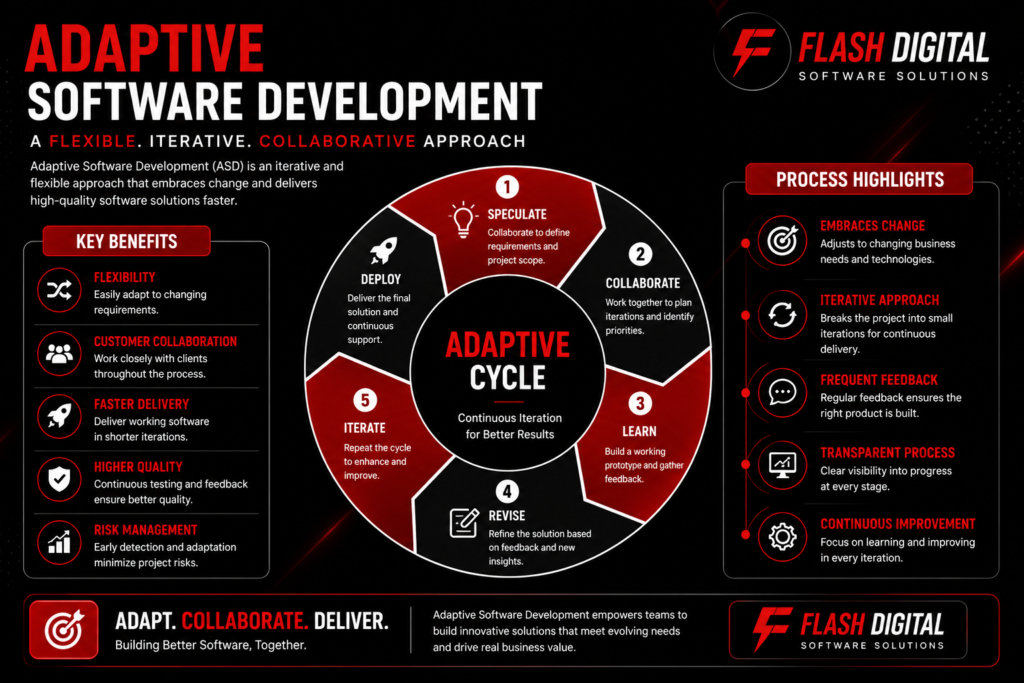
What Social Media Trend Basically Means
What Do Social Media Trends Mean? A Complete Guide for Businesses
Why Following Social Media Trends Still Matters
Open any app right now,w and there’s a decent chance the same sound, format, or phrase shows up three or four times before you’ve scrolled past the first ten posts. That’s a trend doing its job. It’s also exactly why so many business owners end up asking the same question: what does a social media trend really mean, and is it worth building content around one?
Short answer: sometimes. A trend isn’t just a meme or a dance a platform’s algorithm happens to be pushing this week. It’s a signal, a temporary spike in what a large number of people are already paying attention to. Businesses that understand how that signal works can borrow some of that attention. Businesses that chase every trend without understanding why it’s trending usually end up with content that feels random and doesn’t build anything.
What You’ll Learn in This Guide
This guide breaks down what a social media trend really is, how platform algorithms decide what to push, how businesses (including ones here in Austin, TX) can use trends without looking like they’re just copying whatever’s popular that week, and where trend-chasing tends to go wrong. By the end, “jumping on a trend” should feel less like guesswork and more like a decision you can explain.
What Is a Social Media Trend?
Understanding Social Media Trends
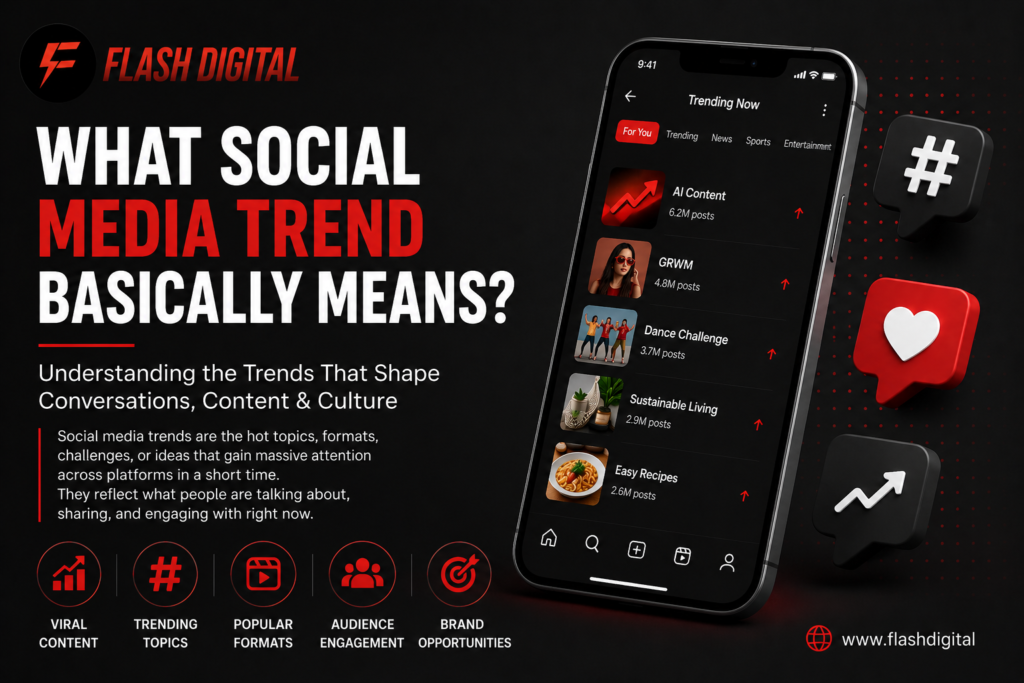
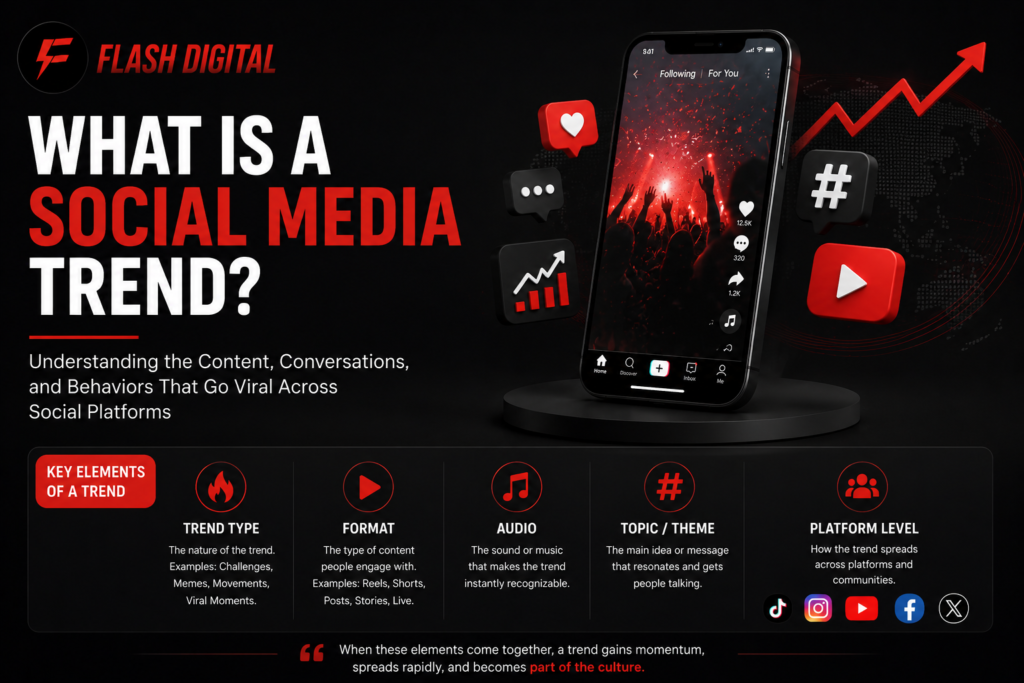
A social media trend is, at its core, a pattern, a sound, a format, a hashtag, or a type of post that a large number of accounts start using around the same time, usually because a platform’s algorithm is actively rewarding it with extra reach. Some trends last a weekend. Others, like short-form video itself, stick around long enough to reshape how an entire platform works.
Types of Social Media Trends
There are a few different flavors worth knowing apart. Format trends (a specific video style or editing pattern), audio trends (a sound or song tied to a specific type of content), topic trends (a news event or cultural moment everyone’s suddenly talking about), and platform-level trends (a feature Instagram or TikTok is pushing hard because they want more people using it). Each one behaves a little differently, and each one has a different shelf life.
Why Businesses Track Trends at All
Businesses pay attention to trends because trend-aligned content tends to get pushed further by the algorithm than a normal post would, at least for a short window. That extra reach is basically free distribution, assuming the content is genuinely good and the trend fits the brand. Force a trend that has nothing to do with what a business sells, and it usually just reads as try-hard.
How Do Social Media Trends Actually Work?
Spotting a Trend Early
Everything starts with noticing a pattern before it peaks. A sound getting used in a growing number of unrelated videos, a specific caption style showing up repeatedly, a hashtag climbing faster than usual. Catching it early matters, since by the time something is obviously trending, a lot of the algorithmic boost has already been claimed by whoever got there first.
Adapting the Trend to the Brand
Next comes the part most businesses skip: connecting the trend to something real about the brand instead of just copying the format wholesale. A local coffee shop jumping on a trending sound works a lot better when it’s tied to an actual product or moment in the shop, not just a random clip with the trending audio slapped on top.
A home services client of ours in Austin picked up a trending “day in the life” format last spring and shot it on a technician’s actual truck between real jobs, no script, no studio. It pulled in more profile visits in ten days than the account had gotten in the previous four months combined. Nothing fancy about the production. It just happened to land at the right moment with something real behind it.
Publishing at the Right Moment
Timing matters more than people expect. Post too early and the algorithm hasn’t started rewarding the trend yet. Post too late and everyone’s already seen fifteen versions of it. There’s usually a window, often just a few days, where jumping in still gets meaningful extra reach.
How the Algorithm Pushes Trending Content
Once a post uses a trending sound or format, the platform’s recommendation system tests it with a small audience first. Strong engagement in that first hour or two- watch time, shares, comments- tells the algorithm to widen distribution.
Weak engagement, and the post quietly stops being shown. Trend or no trend.
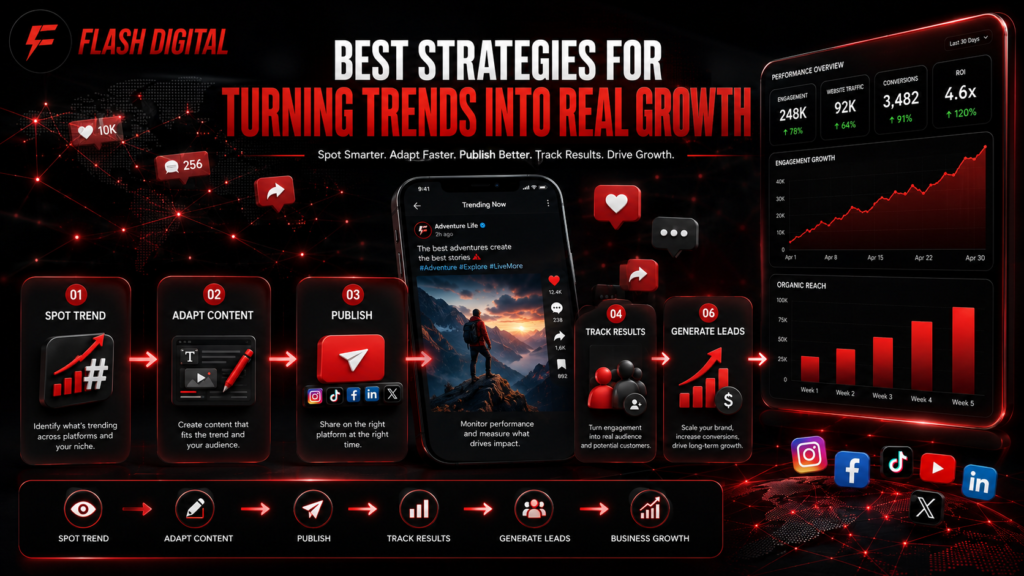
Put together, that’s roughly how a trend moves through a platform: someone spots it early, adapts it to fit their content, publishes it in the right window, and the algorithm decides how far it travels from there.
Understanding the Algorithm Behind Trends
What Happens When a Post Goes Live?
The moment a post publishes, most platforms run it through a small initial test audience, sometimes just a few hundred people, before deciding whether to push it further. That initial performance data matters more than almost anything else about the post.
How Algorithms Decide What to Push
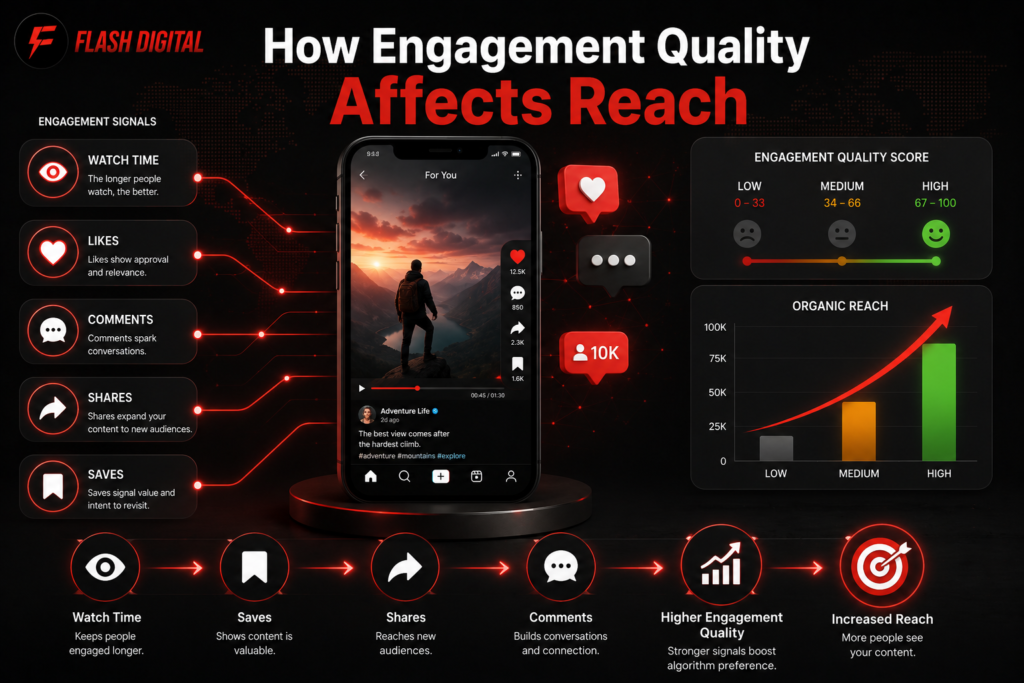
Reach isn’t just about using a trending sound. Platforms weigh watch time, completion rate, shares, and comments heavily, sometimes more than likes. A post using a trending format but boring content will often underperform a post with weaker production but genuinely engaging content, since the algorithm cares about what keeps people on the app, not just what technically matches a trend.
Engagement Signals Explained
The strongest signal on most platforms right now is watch time and rewatches, followed by shares (since a share sends the post outside the platform’s normal reach entirely) and saves. Comments matter too, but mostly early comments, in that first hour after posting, which is part of why a lot of brands ask a small internal group to comment right after something goes live.
FAQ
No. TikTok and Instagram Reels lean heavily on watch time and shares. LinkedIn rewards comments and dwell time more. What counts as “trending” and how it gets rewarded is genuinely different platform to platform.
Most trends peak within a week or two and fade within a month. Some formats stick around much longer if they keep getting reused in new ways rather than copied identically.
Small businesses often benefit more, honestly, since a single well-timed trend post can outperform months of regular content in terms of reach, without needing a large budget behind it.
How Trend-Based Content Strategy Works
Reactive Trend Participation
This is the fastest, lowest-effort version, jumping on a trend within a day or two of noticing it, with minimal production most of the time. It works well for quick wins but rarely builds a consistent audience on its own.
Planned Trend Integration
A more deliberate approach, watching for trends that specifically fit an upcoming product launch, seasonal moment, or campaign, and building content around the intersection of the two instead of reacting randomly.
Trend-Adjacent Original Content
Some of the strongest performing content doesn’t copy a trend exactly; it borrows the underlying format or structure while doing something original with it. This tends to age better than a direct copy, since it doesn’t look dated the moment the trend fades.
Choosing the Right Approach
Most businesses end up using a mix. Reactive trend jumps to stay visible week to week, and planned integration around bigger moments where more production effort makes sense. Which mix makes sense really depends on how much content capacity the team has to spare.
How Engagement Quality Affects Reach
What Counts as Real Engagement
Not all engagement is treated equally by platform algorithms. A comment that sparks a back-and-forth conversation carries more weight than a one-word reply. A share to a story counts differently than a public repost. Understanding this helps explain why two posts with similar like counts can perform completely differently in terms of actual reach.
Content Relevance to Audience
This measures how well a piece of content matches what an account’s existing audience tends to engage with. A home services business posting a trending dance that has nothing to do with home services is going to underperform, even if the trend itself is popular, because it doesn’t match what that specific audience showed up for.
Production Quality Without Overproducing
Platforms have gotten noticeably better at rewarding content that feels native to the app, shot on a phone, casual, unpolished, over content that looks like a traditional ad. Landing page polish can lift a webpage’s conversion rate. On social, that same instinct to over-polish tends to hurt reach instead of helping it.
Key Components of a Successful Social Media Trend Strategy
Clear Goals
Decide upfront what a trend-based post is supposed to accomplish: brand awareness, website traffic, direct leads, before building anything around it. The goal shapes what “success” even looks like for that post.
Trend Monitoring
Someone on the team, or a tool built for this, needs to be watching what’s trending on a regular basis. Trends move fast enough that checking in once a month means missing most of them entirely.
Fast Production Turnaround
The businesses that benefit most from trends usually have a lightweight production process: phone camera, quick edit, published within a day or two, rather than a multi-week approval chain that kills the timing before anything goes live.
Brand Fit Filter
Before jumping on anything, a quick gut check: does this make sense for the brand, or are we doing it just because it’s popular? Skipping this step is how businesses end up with content that gets views but does nothing for brand perception.
Performance Tracking
Without tracking which trend-based posts drove traffic, leads, or sales versus which ones just got views, there’s no real way to know which approach is worth repeating.
FAQ
No. Picking one or two platforms where the actual customer base spends time tends to outperform spreading thin across five platforms with less consistency on each.
It varies, but a rough starting point is a few hours a week for monitoring and quick production, rather than trying to catch everything.
Sometimes, but it’s rarely a single post on its own. A viral moment works best as a spike on top of consistent regular posting, more often than not, not a replacement for it.
Best Practices for Using Social Media Trends
Watch Before You Post
Spend time understanding why a trend is working before jumping in. Copying the format without understanding the underlying joke or reference is one of the fastest ways to look out of touch instead of current.
Move Quickly, Not Perfectly
A slightly rough post published within the trend’s active window tends to outperform a polished post that comes out after the moment has passed. Speed matters more than most brands are comfortable with.
Use Trending Audio Correctly
On platforms where sound drives reach, using the actual trending audio clip, not a similar-sounding replacement, matters for how the algorithm categorizes and pushes the post.
Track What Actually Converts
Not every trend needs to end in a hard sell. But tracking which trend-based posts drove profile visits, link clicks, or messages helps separate what’s genuinely working from what just felt fun to make.
Don’t Force a Trend That Doesn’t Fit
If a trend requires stretching to make it relevant, it’s usually not worth the post. Audiences notice forced relevance quickly, and it tends to cost more in brand trust than the reach is worth.
Common Mistakes Businesses Make With Trends
Copying a Trend Too Literally: Recreating a trend exactly, with no connection to the brand at all, comes across as generic and rarely drives anything beyond a view.
Posting Too Late: By the time a trend has been covered by marketing newsletters and business pages, the organic reach boost has typically already faded for most accounts.
Ignoring Platform-Specific Behavior: A trend that works on TikTok doesn’t always translate directly to Instagram or LinkedIn. Reposting the exact same content everywhere without adjusting for the platform will often underperform on at least one of them.
Skipping a Clear Next Step: A trending post that gets views but has no bio link, no call to action, and no way to capture interest is close to wasted reach.
Treating Trends as the Whole Strategy: Trend content works best as a layer on top of a consistent regular posting schedule, not a replacement for one. Accounts that only post when something’s trending tend to lose momentum between trends.
Best Strategies for Turning Trends Into Real Growth
High-Intent Content Moments
Some trends naturally align with buying intent; a “things I wish I knew before X” format, for example, works well for service businesses since it doubles as genuine, useful information.
Audience-Specific Trend Selection
Not every trend fits every audience. Filtering trend options through “would our actual customers find this relevant” cuts out a lot of wasted effort chasing trends that were never going to convert anyway.
Repurposing Trend Content
A single trend-based video can often get reworked into a few other formats: a shorter cut for one platform, a quote graphic pulled from the caption, a follow-up post answering questions it generated, stretching the value of one piece of content further.
Consistent Measurement
Continuously checking which trend formats drove profile visits or leads, not just views, helps sharpen future decisions about which trends are worth the time.
These four pieces make up most of what separates businesses that turn trends into real growth from ones that just generate views without much underneath them.
Why Businesses in Austin, TX Choose Professional Social Media Management
Why Local Expertise Matters
Austin’s social media landscape moves fast; the city has a genuinely online, culturally engaged audience, and what resonates with an Austin audience doesn’t always match what works nationally. A team that understands the local scene can build content that feels native to the city instead of generic and out of place.
How Flash Digital Helps Austin Businesses Grow
Flash Digital, based in Austin, TX, manages social media strategy built around real engagement data rather than guesswork, combining trend monitoring, content production, and local audience insight to help Austin businesses stay visible without burning hours chasing every trend themselves. If you’ve searched for social media management services in Austin, TX, or found yourself scrolling through trending content wondering how to turn it into real business results, that’s exactly the gap Flash Digital works to close for local businesses.
Suggested image: Social media performance dashboard showing reach, engagement, and follower growth
Building a Social Media Strategy That Actually Uses Trends Well
So, what do social media trends really mean for a business, in the end? They’re a temporary spike in attention, one that rewards businesses who understand why something is resonating, not just businesses who copy the format fastest. Every trend that drives real results got there through a mix of good timing, genuine brand fit, and quick execution, not luck.
Understanding that changes how a business approaches its whole content calendar. Trend content and consistent regular posting aren’t competing strategies; they work together, and leaning too hard on one while ignoring the other usually shows up in slower growth over time. The same goes for tracking results: watching which trends drove traffic or leads isn’t a one-time check; it’s the ongoing work that turns viral moments into real business growth.
For businesses without the time to monitor trends, produce content, and track performance on top of everything else running a business involves, working with an experienced social media team often makes the difference between an account that occasionally goes viral and one that consistently grows. Whether a business is just starting to pay attention to trends or trying to fix an account that’s plateaued, the fundamentals in this guide are the same ones behind every account that’s turning attention into customers.
Related Questions
- What is a social media trend?
- How do social media algorithms decide what to push?
- What is the best time to post trending content?
- What is engagement rate and why does it matter?
- What is the difference between reactive and planned trend content?
- Should businesses hire a social media agency?
- How does social media marketing compare to paid ads?
- How do social media management services work?