Web Development in Silicon Valley
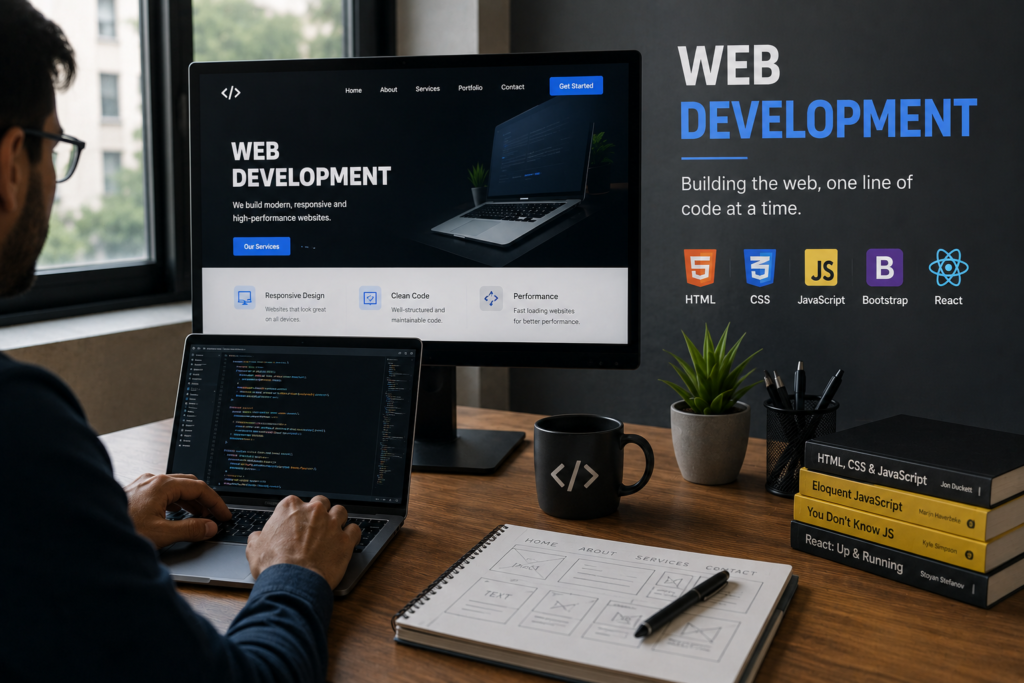
Web Development in Silicon Valley: How Flash Digital Builds Websites That Actually Grow Your Business
Why Web Development Still Makes or Breaks a Business
Here’s something I’ve noticed after years of watching businesses launch, relaunch, and sometimes completely rebuild their websites: nobody remembers a website that just “worked.” But everybody remembers the one that was slow, confusing, or looked like it hadn’t been touched since 2014. In a market as competitive as Silicon Valley, that kind of first impression can cost you a client before they’ve even read your homepage.
Web development isn’t just about making something that looks nice on a screen. It’s the foundation of how people find you, how they experience your brand, and — ultimately — whether they trust you enough to buy from you, sign up, or book a call. That’s the piece a lot of businesses miss, and it’s exactly where Flash Digital has built its reputation.
This blog is a walk-through of what good web development actually involves today, why location matters more than people think, and how a Silicon Valley-based team like Flash Digital approaches it differently than a generic template shop.
The Silicon Valley Difference
Silicon Valley isn’t just a location on a map — it’s a standard. Companies here are competing against some of the most well-funded, best-designed digital products in the world. A local bakery’s website is sitting one browser tab away from a Y Combinator startup’s landing page. That raises the bar for everyone, whether you’re a five-person agency or a growing SaaS company.
This is exactly why businesses in the Bay Area lean on specialized web development partners instead of DIY builders. It’s not about vanity — it’s survival in a market where user expectations are shaped by the best products on Earth. Flash Digital has built its entire process around that reality, treating every project, big or small, like it has to compete at that level.
It’s worth sitting with that for a second, because it changes how you should think about your own website budget. This isn’t about outspending competitors — it’s about not giving visitors a reason to bounce in the first five seconds. Flash Digital’s clients in the Bay Area consistently report that the biggest jump in leads comes not from a bigger ad budget, but from fixing what the website itself was quietly doing wrong.
Quick Questions Before We Go Further
Most custom websites take anywhere from four to ten weeks, depending on complexity. A simple business site might move faster, while a full e-commerce build or web app naturally takes longer to test properly.
Templates are fine for a quick start, but they rarely scale well, load fast, or rank as strongly in search. If your website is meant to actually generate business, a custom build almost always pays for itself.
Costs vary widely based on scope, but most professional builds range from a few thousand dollars for a small business site to well into five figures for larger, feature-rich platforms.
How Flash Digital Approaches Web Development
What separates a decent website from a genuinely good one usually comes down to process. Anyone can throw together pages. Building something that loads fast, converts visitors, and holds up as a business grows takes a team that treats web development as a craft, not a checklist.
At Flash Digital, every project starts with a conversation about the business itself, not just the design. Who is the site actually for? What should someone do in the first ten seconds on the page? What happens after they click “contact us”? These questions shape the wireframes long before a single line of code gets written.
From there, the build itself follows a few core principles that Flash Digital treats as non-negotiable:
● Mobile-first design — since most traffic in 2026 arrives from a phone, not a desktop
● Clean, semantic code that search engines can actually read and rank
● Page speed optimization, because a three-second delay can quietly cost half your visitors
● Accessibility, so the site works for everyone, not just the average visitor
● Built-in SEO structure from day one, instead of bolted on afterward
This is also where a lot of businesses get surprised — good web development and good SEO aren’t separate projects. They’re the same project. A site built without search visibility in mind is a site that will need to be rebuilt in a year. That’s the philosophy that runs through everything on flashdigi.com, and it’s the reason a lot of Flash Digital’s clients come back for a second project instead of shopping around.
Common Web Development Mistakes That Quietly Cost Businesses Customers
Some of the most damaging problems on a website aren’t dramatic — they’re small, easy-to-miss details that add up. A few of the most common ones Flash Digital sees when auditing an existing site:
● Slow-loading images and unoptimized code that push load times past three seconds
● Contact forms and buttons that don’t work properly on mobile screens
● Missing or duplicate page titles and meta descriptions, which quietly hurt search rankings
● No clear call-to-action, leaving visitors unsure what to do next
● Outdated plugins or frameworks that create security risks over time
None of these are complicated to fix individually, but most businesses don’t know they exist until someone actually goes looking. That’s usually the first thing Flash Digital does before starting a new build — auditing what’s already there so nothing gets carried over by accident.
Whether someone opens your site on a laptop, a tablet, or a phone in line at a coffee shop, it needs to look and feel intentional. That consistency is one of the more underrated parts of professional web development — and one of the easiest things to get wrong without the right team.
FAQ
Not at all. Flash Digital works with local service businesses, e-commerce brands, healthcare providers, and startups alike. The Silicon Valley location shapes the standard of work, not the type of client.
Yes — a lot of projects start as redesigns. In many cases the content and branding are solid, but the underlying code and structure are holding the site back. A redesign can fix that without throwing everything out.
Both. Because web development and SEO are so closely connected, Flash Digital builds SEO fundamentals directly into every site rather than treating it as an add-on service.
E-Commerce and Web Apps: Beyond the Basic Business Site
Not every project is a five-page business website. As companies grow, the website itself often needs to grow with them — into a full online store, a customer portal, or a custom web application that handles bookings, payments, or account management. This is where a lot of generic website builders quietly run out of road.
Flash Digital’s approach to e-commerce and web app projects leans on the same principles as a standard business site — speed, clarity, mobile responsiveness — but layers in the extra complexity these projects demand: secure payment processing, inventory or booking logic, user accounts, and integrations with the other tools a business already relies on, like CRMs or email platforms. The goal is always the same though: nothing should feel bolted on. A checkout page should feel like a natural extension of the homepage, not a jarring handoff to a different system entirely.
For businesses in Silicon Valley specifically, this matters even more. Local customers are used to frictionless checkout experiences from the biggest platforms in the world, and that expectation doesn’t lower just because they’re shopping with a smaller, local brand. A clunky checkout flow is one of the fastest ways to lose a sale that was otherwise already won.
Trends Shaping Web Development Right Now
A website built in 2021 already looks and behaves differently from one built today, and that pace isn’t slowing down. A few shifts worth paying attention to:
AI-assisted personalization is becoming standard rather than experimental — sites that adjust content or recommendations based on visitor behavior tend to convert noticeably better than static ones. Core Web Vitals, Google’s real-world speed and stability metrics, now directly influence how a page ranks, which means performance and SEO are no longer separate conversations. Headless CMS setups are giving businesses more flexibility to update content without touching code. And accessibility, once treated as optional, is increasingly a baseline expectation — both for legal reasons and because it simply makes a site usable by more people.
Flash Digital keeps an eye on all of this so clients don’t have to. That’s really the value of working with a dedicated web development company in Silicon Valley instead of piecing a site together with freelancers or a template: someone is actually tracking where the web is heading and building for it now, not scrambling to catch up later.
There’s also a quieter shift happening around trust signals — things like clear privacy practices, visible security certifications, and transparent contact information. As more purchasing and sign-up decisions happen entirely online, visitors are getting better at spotting sites that feel hastily put together versus ones that feel legitimate. Web development in 2026 isn’t just a technical exercise; it’s part of how a brand earns confidence before a single conversation happens.
The chart above reflects a pattern that shows up again and again — when a website is rebuilt with SEO and performance baked in from the start, organic traffic tends to climb steadily over the following months rather than spiking and fading. That’s the difference between a website that was launched and one that was actually built to grow.
What a Web Development Investment Actually Looks Like
Pricing is usually the first question and the last thing anyone wants to talk about directly, so here’s a straightforward breakdown of how it tends to shake out. A simple, well-built business website — a handful of pages, mobile-responsive, basic SEO foundation — typically lands in the lower thousands. A more involved site with custom design, blog functionality, and stronger SEO architecture sits in the middle tier. E-commerce stores and custom web applications, given the added complexity of payments, user accounts, and integrations, land at the higher end.
The number that matters more than the price tag, though, is the return. A website that loads quickly, ranks for the right search terms, and actually guides visitors toward a call or a purchase pays for itself in a way a cheap, slow site never will — even if the cheap site looked like a bargain on day one. Flash Digital walks through this math with every client before a single design decision gets made, so there are no surprises halfway through the project.
This is also why a lot of businesses treat their website less like a one-time expense and more like ongoing infrastructure — similar to how they’d think about a physical storefront. It needs occasional updates, monitoring, and small improvements over time to keep performing the way it did on launch day.
What Working With a Local Silicon Valley Team Actually Looks Like
There’s a real difference between hiring a nameless overseas team through a marketplace and working with a local web development company that you can actually sit down with. It’s not about geography for its own sake — it’s about accountability and speed of communication. When feedback can happen in real time and someone genuinely understands the local market a business is competing in, projects move faster and end up closer to what the client actually pictured.
That’s a big part of how Flash Digital operates day to day: fewer layers between the client and the people actually writing the code, shorter feedback loops, and a team that’s genuinely invested in how the finished site performs after launch — not just whether it shipped on time.
Why Silicon Valley Businesses Keep Choosing Flash Digital
There’s no shortage of web development companies to choose from, in Silicon Valley or otherwise. What tends to set Flash Digital apart is fairly simple: the team treats every site like it has to earn its place online, not just exist. That means real conversations about goals, honest recommendations even when they’re not the flashiest option, and a build process that holds up months and years after launch.
If you’re currently weighing your options for a website build or redesign, it’s worth taking a look at flashdigi.com and seeing how the Flash Digital team approaches projects like yours. A short conversation up front usually saves a lot of guesswork later.
Whatever stage your business is at — brand new, mid-growth, or overdue for a redesign — the right web development partner should feel less like a vendor and more like a second team working toward the same goal. That’s the standard Flash Digital holds itself to on every project.
A Quick Checklist Before You Hire Anyone
If you’re in the process of comparing web development companies — in Silicon Valley or anywhere else — a few questions tend to separate the teams worth hiring from the ones you’ll regret choosing six months in:
● Can they show you real, working examples of sites they’ve built — not just design mockups?
● Do they talk about SEO and performance as part of the build, or as a separate upsell?
● Is there a clear plan for who maintains and updates the site after launch?
● Do they ask about your business goals before jumping into colors and fonts?
● Are timelines and pricing communicated clearly upfront, with no vague “it depends” answers?
A team that can answer all five of those without hesitation is usually a safe bet. It’s a short list, but it filters out most of the guesswork — and it’s the same list Flash Digital is happy to be measured against on every new project.
Bringing It All Together
Web development isn’t a one-time task you check off a list — it’s an ongoing relationship between a business and the digital front door most customers will walk through first. Get it right, and it quietly works in the background, bringing in leads and building trust long after launch day. Get it wrong, and it becomes a constant source of lost opportunities that are hard to even measure.
Silicon Valley businesses don’t have the luxury of a mediocre website — the competition is simply too sharp, and customers have too many other options a click away. That’s the standard Flash Digital builds toward on every single project, whether it’s a five-page local business site or a full-scale web application.
If your current website isn’t pulling its weight, it’s worth a conversation. Head over to flashdigi.com to see recent work and start the conversation with the Flash Digital team.
Related Questions
- How much does professional web development cost in Silicon Valley?
- What is the difference between web design and web development?
- How long does it take to see SEO results after a website redesign?
- What should I look for when choosing a web development company like Flash Digital?
- Should a small business hire a local web development company or work remotely?
- What makes a website rank higher on Google?
- Is it better to rebuild a website from scratch or redesign the existing one?
- How often should a business update its website?